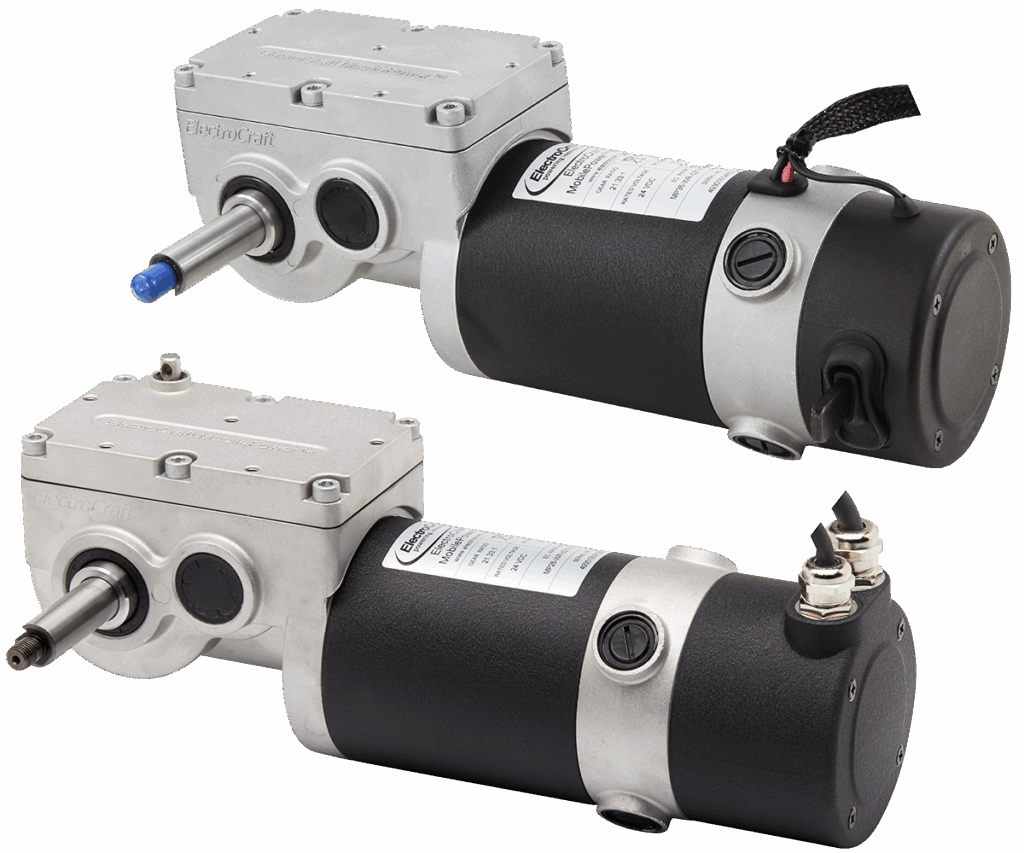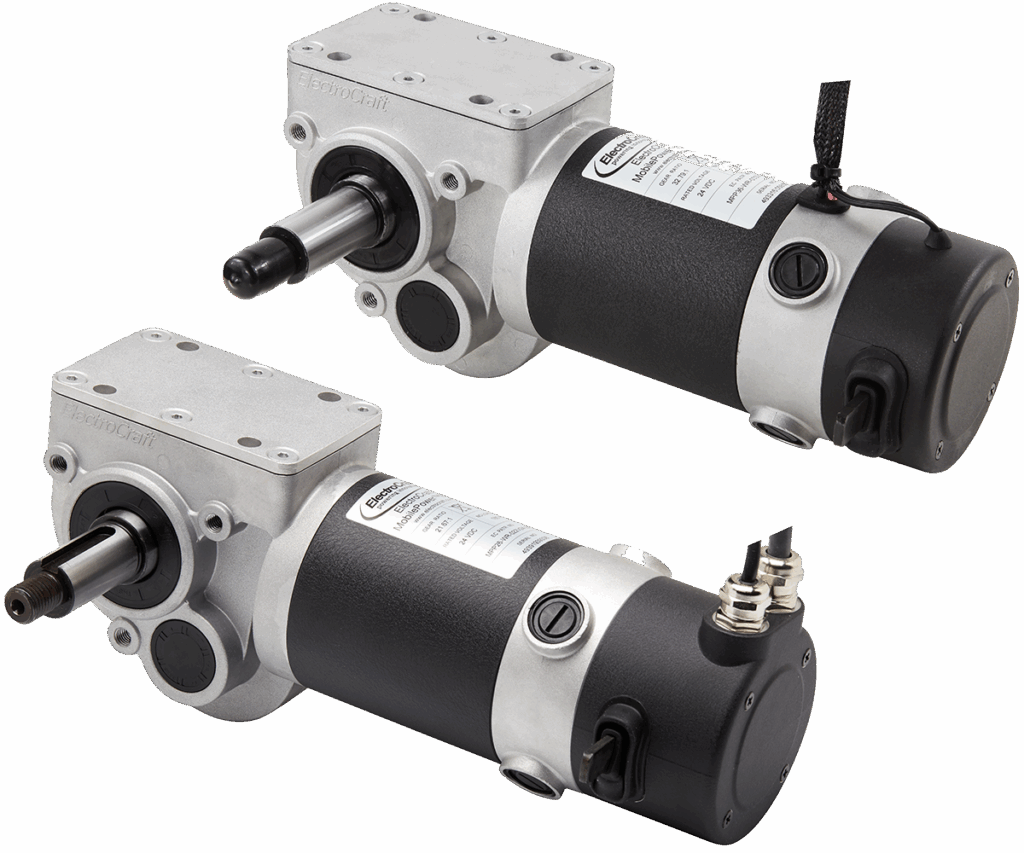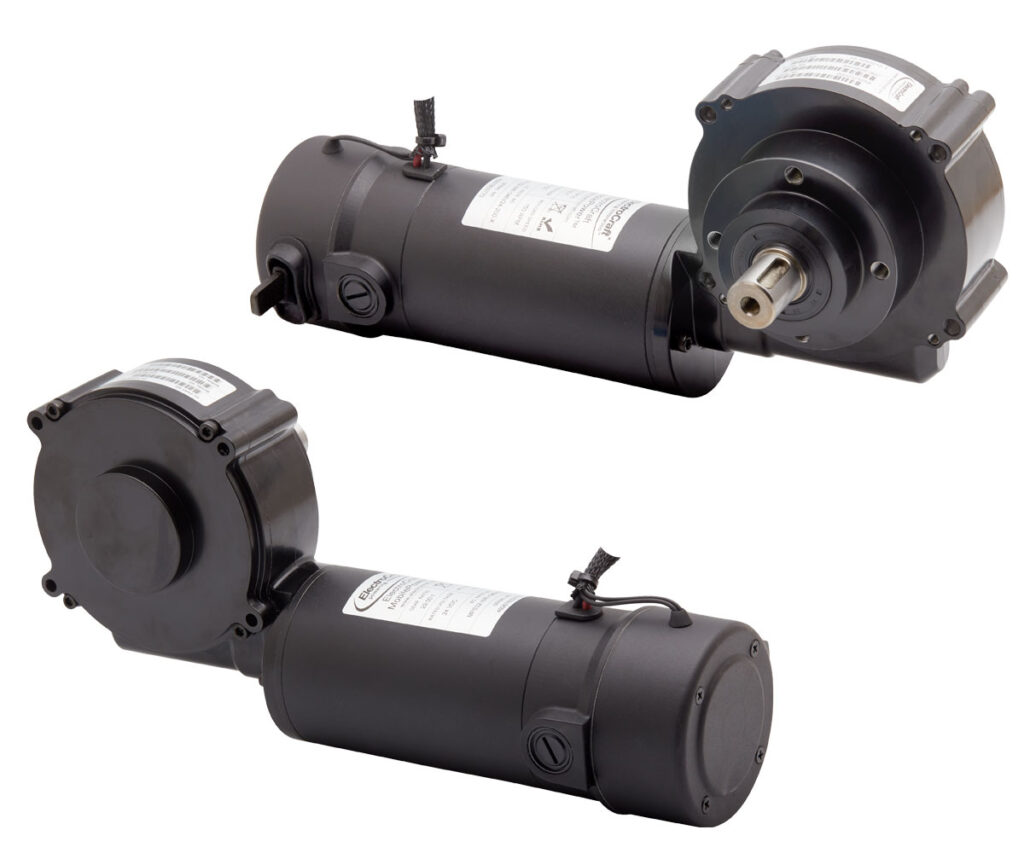

Right-Angle Gearmotors
from ElectroCraft
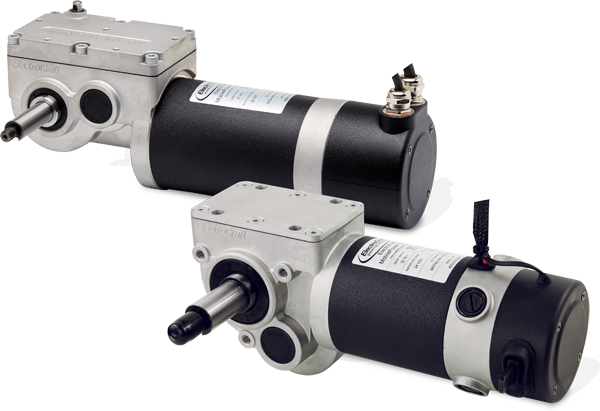
ElectroCraft is a world-renowned leader in the design and manufacturing of right-angle gearmotors. Known for their smooth, controlled power delivery with high starting torque, our gearmotors deliver excellent performance for a wide range of applications, from powered wheelchairs and lifts used for medical mobility to mobile robots and guided vehicles used in warehouses and factories. Available in a wide range of motor and gearing options, from configurable to fully customizable, we have a solution to satisfy your specific application requirements.

High Starting Torque
High torque motors with integrated single or two-stage gearbox designs deliver incredible peak torque ratings up to 145 Nm.
Durable and Reliable
Designed to withstand harsh operating conditions using industrial grade materials
Fully Customizable
ElectroCraft right-angle gearmotors can be customized to meet exact OEM requirements. Shaft dimensions and features, winding voltages, performance characteristics, feedback devices, mounting methods, protection ratings, wiring harnesses, connectors, and more can be custom tailored for the application

MP Mobility Gearmotors

Peak Torque 50.4 to 109.9 Nm (446 to 973 lb-in)

ElectroCraft MobilePower™ (MP Series) gearmotors feature an integrated design that provides superior performance and reliability at an affordable price compared to traditional right-angle motor/gearbox combinations. The MP Series is available in three distinct configurations:

  • 4-pole PMDC brush motor with integrated 2-stage worm/spur gearbox and brake unit, designed specifically for medical mobility applications
  • 4-pole PMDC brush motor with integrated 2-stage worm/spur gearbox, brake unit, optical encoder, and industrial grade cabling for a wide range of applications
  • 4-pole Brushless DC motor with integrated 2-stage worm/spur gearbox, brake, encoder, and industrial grade cabling, for a wide range of applications, offering higher efficiency, reduced noise, and longer life
Frame Size
Peak Torque

MP24 91.5 mm Mobility Gearmotors

Frame Size 91.5 mm (3.602 in)
Peak Torque 98.0 Nm (868 lb-in)

MP26 93.1 mm Mobility Gearmotors

Frame Size 93.1 mm (3.665 in)
Peak Torque 109.9 Nm (973 lb-in)

MP36 93.1 mm Mobility Gearmotors

Frame Size 93.1 mm (3.665 in)
Peak Torque 109.9 Nm (973 lb-in)

MPP Mobility Gearmotors

Peak Torque 60.5 to 144.9 Nm (535 to 1,282 lb-in)

ElectroCraft MobilePower™ Plus (MPP Series) gearmotors feature a heavy-duty integrated design that provides superior performance and reliability at an affordable price compared to traditional right-angle motor/gearbox combinations.  The MPP Series is available in three distinct configurations:

  • 4-pole PMDC brush motor with heavy-duty integrated 2-stage worm/spur gearbox and brake unit, designed specifically for medical mobility applications
  • 4-pole PMDC brush motor with heavy-duty integrated 2-stage worm/spur gearbox, brake unit, optical encoder, and industrial grade cabling for a wide range of applications
  • 4-pole Brushless DC motor with heavy-duty integrated 2-stage worm/spur gearbox, brake, encoder, and industrial grade cabling, for a wide range of applications, offering higher efficiency, reduced noise, and longer life
Frame Size
Peak Torque

MPP24 91.5 mm Mobility Gearmotors

Frame Size 91.5 mm (3.602 in)
Peak Torque 116.9 Nm (1,035 lb-in)

MPP26 93.1 mm Mobility Gearmotors

Frame Size 93.1 mm (3.665 in)
Peak Torque 144.9 Nm (1,282 lb-in)

MPP36 93.1 mm Mobility Gearmotors

Frame Size 93.1 mm (3.665 in)
Peak Torque 144.9 Nm (1,282 lb-in)

MPS Mobility Gearmotors

Peak Torque 79.8 to 113.7 Nm (706 to 1,006 lb-in)
ElectroCraft MobilePower™ (MPS Series) gearmotors feature an integrated single-stage gearbox design that provides superior performance and reliability at an affordable price compared to traditional right-angle motor/gearbox combinations.  The MPS Series is available in the following configuration:

  • 2-pole PMDC brush motor with integrated single-stage worm gearbox and brake unit, designed specifically for medical mobility applications, offering higher efficiency and reduced noise compared to two-stage designs.
Frame Size
Peak Torque

MPS32 91.5 mm Mobility Gearmotors

Frame Size 91.5 mm (3.602 in)
Peak Torque 113.7 Nm (1,006 lb-in)

MP vs. MPP vs. MPS for your torque and duty

Start with the output torque at the wheel or shaft. Add in start loads, stall loads, and the number of starts per hour. The duty cycle increases the gearbox's internal heat.

Choose a series first, then look at the model cards. Check the frame size and peak torque range. After that, review the S1 and S2 torque values on the model pages.

MP Series

for mobility and plant traction work

MP Series lists 4-pole PMDC and 4-pole BLDC builds. MP builds use a 2-stage worm-and-spur gearbox. Brake and encoder options appear in MP configurations.

Choose the MP Series for traction drives that need frequent starts. The MP Series is used in mobility equipment, lifts, and plant mobile machines. Make sure the brake matches your needs for holding on ramps and lifts.

MPP Series

for higher load and heavier pull work

The MPP Series lists heavy-duty 2-stage worm-and-spur gearboxes. MPP configurations include PMDC brushed and BLDC motor builds. Brake, encoder, and industrial-grade cabling options appear.

Choose the MPP Series when you need higher traction loads and a higher duty cycle. The MPP Series is recommended for ramps, uneven terrain, and curb climbing. After selecting a model, check the peak torque and S2 torque ratings.

MPS Series

for single-stage mobility builds

The MPS Series lists a single-stage worm gearbox build. MPS32 lists a 2-pole PMDC brushed motor. A brake unit appears in the MPS configuration.

Choose the MPS Series when space is limited in the mobility frame. Single-stage gearing means fewer gear stages compared to two-stage builds. Make sure the brake is suitable for holding after power is removed.

If your main concern is load, start with the MPP Series. If space is your main concern, start with the MPS Series. Then, check the torque ratings and how the gear ratio affects performance.

Peak torque vs continuous torque

Torque ratings depend on how long the load is applied and how much heat builds up. The duty cycle helps you choose the right torque rating for your drive. ElectroCraft tables show three torque labels for each model: Peak Torque (5 sec), S2 Torque (15 min), and S1 Torque (Continuous).

Peak Torque

(5 sec)

Peak Torque (5 sec) is for short starts from a complete stop and brief stall loads during a jam. Limit the maximum current to 5 seconds per event, and repeat no more than twice per cycle. Allow 10 minutes between peak events.

S2 Torque

(15 min)

S2 Torque (15 min) is for longer pulls under load. Use S2 for repeated starts during a heavy drive cycle. S2 timing assumes the motor starts at room temperature. If you start again before the motor cools, heat will build up and reduce available torque.

S1 Torque

(Continuous)

S1 Torque (Continuous) is for continuous pulls without breaks for cooling. Use S1 for long climbs or extended traction runs.

Compare torque in the same gear ratio column. Torque and output speed change across ratio options. Match torque and output speed from the same table row. Peak Torque (5 sec) fits short start loads. S2 fits longer pulls, then S1 fits a continuous pull.

Peak current limits only apply during Peak Torque (5 sec) events. Heat limits affect S2 and S1 torque during longer pulls.

Gear ratio, speed, and output torque

The gear ratio determines the output speed at the wheel or shaft. It also sets the output torque for starts and climbs.

The model specs list gear ratios and output speeds. Pick a series, then choose a ratio for your gear motor.

Output speed comes first

Set a target travel speed for the machine. Use wheel size or shaft speed to confirm the target. A lower gear ratio raises output speed. A higher gear ratio lowers output speed.

Torque comes from the load

List load weight, incline grade, and ramp starts. Add stall events, jam loads, and lift loads. Use Peak Torque (5 sec) for short start loads. Use S2 Torque (15 min) for longer pulls. Use S1 Torque (Continuous) for continuous pull.

Higher ratio vs lower ratio

A higher gear ratio increases torque at the output shaft. It also reduces output speed at that shaft. A lower gear ratio increases output speed at the output shaft. It also reduces output torque at that shaft.

Duty cycle and heat

Duty cycle depends on pull time and rest time. Duty cycle also depends on the starts per hour. Check S2 and S1 torque ratings before final ratio choice. Keep a heat margin for repeated starts and long pulls.

Brake, encoder, and cabling options

Brake, encoder, and cabling options change hold, feedback, and wiring. A brake unit supports park hold on ramps and lifts. An encoder provides speed feedback or position feedback.

ElectroCraft includes these options in each series configuration. Use the gearmotor model page to confirm brake, encoder, and cabling choices. Match each option to your load, controller, and available installation space.

Brake unit

for holds and controlled stops

A brake unit holds the load on ramps and lift drives. It prevents rollback after power loss and helps keep the load in place during loading and unloading.

Brake choice depends on the hold torque at the output shaft. It also depends on hold time and the number of starts per hour. Keep duty cycle and heat limits in view.

Encoder feedback

for speed and position control

Encoder feedback supports closed-loop speed control on traction drives. It also supports position moves on lifts and mobile equipment. Some builds list an optical encoder option.

Match the encoder to your drive input and signal type. Confirm your feedback needs before choosing the harness and connectors. Make sure connector and pinout requirements are met.

Industrial-grade cabling

for routing and service work

Industrial-grade cabling supports routing through tight mobility frames. It supports clamps, bends, and vibration points near the gearbox. It also supports quicker service access during repairs.

Set the harness length based on the actual routing path and needed slack. Choose the connector type and pinout before finalizing the build. Place strain relief near bends and mounting points.

FAQs

Gear ratio changes output shaft speed and output torque. A higher ratio reduces output speed and raises output torque. A lower ratio raises output speed and reduces output torque. Use the same gear ratio point when comparing models. Use gear motor specs to confirm ratio, speed, and torque.

Start with the required torque at the wheel or output shaft. Set a target output speed equal to the travel speed. Add ramp starts, stall loads, pull time, and rest time. Use the duty cycle to match Peak, S2, and S1 torque ratings on each gearmotor.

Peak Torque (5 sec) covers short start loads and brief stall events. Use Peak Torque for breakaway events during ramp starts. Compare Peak Torque (5 sec) with S2 Torque (15 min). Compare those values with S1 Torque (Continuous) for long pulls.

A right-angle gearbox rotates the output 90 degrees. That layout fits tight frames and short equipment bays. A right-angle gear motor combines motor and gearbox in one unit. Integration reduces the need for separate brackets, couplers, and alignment steps found in split assemblies.

An IP rating uses 2 digits for enclosure protection. The first digit indicates protection against solids and dust. The second digit rates protection from water exposure. Higher digits indicate higher protection levels. Use IP rating to match wash exposure, dust levels, and service location.

Backlash comes from the clearance between gear teeth. It appears during direction reversal as free movement. Backlash can reduce positioning accuracy during the reversing motion. Lower backlash helps with small position changes and tighter control response. Gear motor positioning tasks benefit from tighter backlash limits.

Add an encoder when the controller needs speed feedback. Add an encoder when the controller needs position feedback. Encoder feedback supports closed-loop speed control and positioning moves. ElectroCraft lists encoder options on MP and MPP configurations. Confirm signal type, harness, connector, and pinout needs early.

Share target output torque, output speed, duty cycle, and voltage. Add gear-ratio range, mounting orientation, and output-shaft details. List brake unit needs and encoder type. Add harness length, connector type, and pinout needs. Include environmental notes, such as dust and water exposure levels.