
How Technology Advancements are Transforming the Mobility Market

September 12, 2018
Adoption of highly efficient, integrated
gearmotor technology, along with
battery and other design innovations,
continues to redefine the performance
and expand the reach of mobile power
platforms into new medical, industrial,
and all-terrain applications.
The market for
mobile power platforms continues to
expand, with a wide range of devices and applications
ranging from automated guided vehicles and mobile
robotics to human aid and transport systems. The
modern mobility expansion owes much of its success
to the development of devices to aid humans in need,
and with significant advances in technology these
devices have expanded and been adapted for many
different applications.
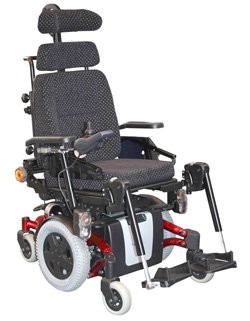
Developed in the 1950s, the first powered mobility
chairs were heavy and cumbersome, and battery life
was short. The wheels were commonly driven by belts
or sometimes even bicycle-type chains and sprockets.
With no direct drive and non-integrated motors and
gearboxes, their overall performance was lacking. Cost
was also an issue. Even up until the 1980s, powered
chairs cost as much as cars.
Markets such as aviation and industrial automation
introduced integrated gearmotor technology — which
combines motors and gearboxes into one unit,
thereby reducing weight and size — into the mobility
market, it began to evolve rapidly.
With the ability to drive the back wheels of the
chair directly, new,
right-angled gearmotors like the ElectroCraft MP-Series
eliminated the inefficiency and frequent maintenance
plaguing belts and chains. At the same time, advances
in drive technology improved control and responsiveness
for the user, while batteries became lighter and more
efficient.
The modern electric mobility era was ushered in,
defined by lighter chair weight, better torque, and a
60% improvement in battery life.
Now, providers of
medical mobility solutions are developing custom
applications for bariatric solutions, rehab chairs,
and high-performance sport chairs, such as those used
by the Wheelchair Football Association (WFA). Other
custom applications include industrial mobile devices
like autonomous vehicles, all-terrain vehicles,
and surgical assist
medical robots that have more stringent requirements,
including quieter operation, extended battery life, and
the ability to operate in harsh environments.
A Better Motor Design
Up until recently, modern mobility designs for medical,
commercial, and industrial markets almost exclusively
used permanent magnet DC motors
(PMDCs). These are characterized by their high starting
torque, fast response time, and compact design.
PMDCs cover a wide performance spectrum. In
mobility applications, peak torques range from 57.7
to 134.2 N-m, depending on motor configuration and
gearing. Nominal no-load motor speed at 24V can be
as high as 252 rpm, although peak torque and power
occur at lower speeds between 80 and 130 rpm.
BLDC motors, which
have several advantages over PMDC motors in mobile
power applications, are rising in popularity. BLDC
motors are extremely quiet and efficient, and require
little maintenance because they have no brushes (which
wear). The absence of brushes also lowers inertia, making
BLDCs very responsive with high efficiency output, a long
battery life, and quieter operation.
By integrating the motor with the gearbox, more motor
options can be utilized for more application flexibility.
Better Gearbox Design
Gearboxes are available in many different configurations.
Some gearmotors use a single-stage gearbox with plastic
gears. Fewer stages means lower power losses, allowing
for more power to be transmitted from the motor to the
drive wheels. Plastic gears are also quieter and lighter,
giving mobile solutions powered by these gearmotors
an edge for standard application requirements.
More demanding mobility designs use two-stage
gearboxes that feature custom metal gears for robust
operation for use in extreme operating environments.
Gearmotors like these are used in sports chairs and
all-terrain machines.
Two-stage PMDC
gearmotors are also used in industrial
mobile devices that require toughness and better lowrange
power. BLDC motors may be integrated with a
wide range of planetary and spur gearboxes to meet
the specific needs of a wide range of applications.
Extended Capabilities
The details of motor and gearbox construction and
integration are important because they determine the
platform’s capabilities. The original medical mobility
solutions had a weight-carrying capacity of around
300 lb. for continuous operation, whereas modern
heavy-duty designs can accommodate more than
600 lb.—ideal for bariatric applications or patient
handling systems.
A wide range of adaptive choices in integrated motor
and gearbox designs affords a wider array of platform
designs. For example, an
ElectroCraft MPS32, which features a 2-pole PMDC motor
integrated with a single-stage, plastic worm gearbox for
quiet, reliable operation, is an excellent motor for general purpose
wheelchairs. A more aggressive application, such as a
sport wheelchair, may require a
four pole MP36 with a 2-stage gearbox and a wide range of available gear
ratios, allowing for higher speed and quicker response
or greater starting torque.
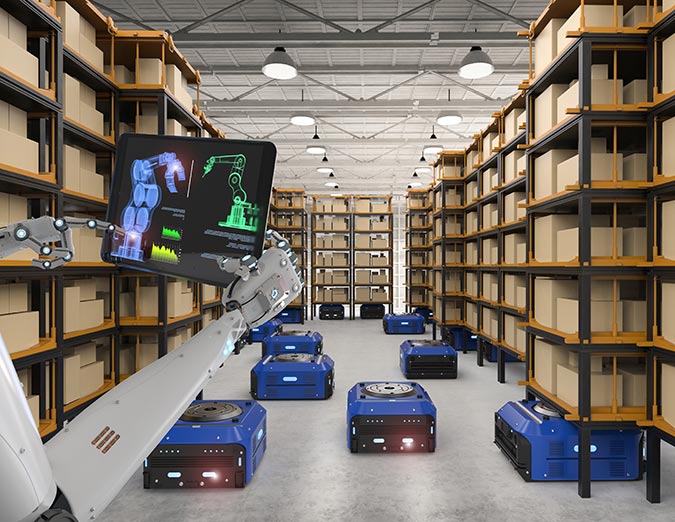
Industrial applications call for an increased weightcarrying
capacity. An autonomous mobile robot for
example, might be moving several hundred pounds
of raw materials from a warehouse to a work station.
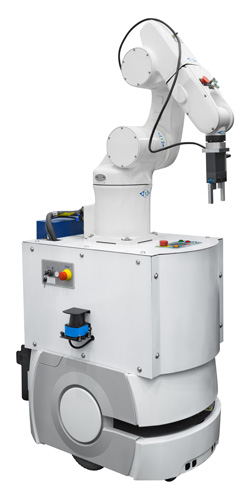
Similarly, the mobile power platforms in surgical
robots must support the weight of the mechanism
to permit delicate and precise operations.
The range and capabilities of modern mobility
applications continues to expand along with the
evolution and advancement of motor and gearbox
integration.
Expanded Environmental Capabilities
The original medical mobility solutions were designed
for the environments commonly encountered in
everyday life. They are designed to operate in a
limited range of ambient temperatures, whereas
modern mobility solutions may accommodate a
temperature range of between −20°F to 120°F. They
are also designed to tolerate incidental water ingress,
dust, and debris intrusion.
Standard solutions are designed to operate on terrains
described in the Americans with Disabilities Act (ADA),
which include ramp angles and smooth terrain. In
contrast, today’s wide range of mobility solutions
allow for greater terrain variations, including the
ability to mount curbs when ramps are not available.
The wide adaptive range of motor and gearbox
solutions also allows platform designers to work with
manufacturers to develop custom systems to meet
a range of application requirements. For example,
they can choose motor and gearbox solutions that
tolerate cryogenic and elevated temperatures; select
BLDCs for spark-free operation in areas with explosion
hazards; or specify water and dust ingress protection
up to IP65 with sealed field shafts.
Conclusion
When the era of mobility began, non-integrated motor
and gear solutions were the norm, but they were
cumbersome, with limited application potential and
a short battery life. Modern solutions, based on a wide
range of integrated
motor/gearbox combinations, provide mobility solutions
with powerfully responsive, efficient, and reliable operation.
The integrated mobility platform continues to evolve with custom
mobility motor manufacturers developing the next
generation of mobile power platforms that can tackle
the mobility and industrial motion applications of
today and tomorrow.